For teams
Patterns, not people.
Connected Echoes become anonymous signals, so leaders can spot momentum and friction early.

A living team signal system
Echo shows you why.
Echo is your tool to signal what’s happening at work for your team.Echo shows the patterns and trends of what’s driving work forward and what’s causing friction, so you can course-correct as it happens.
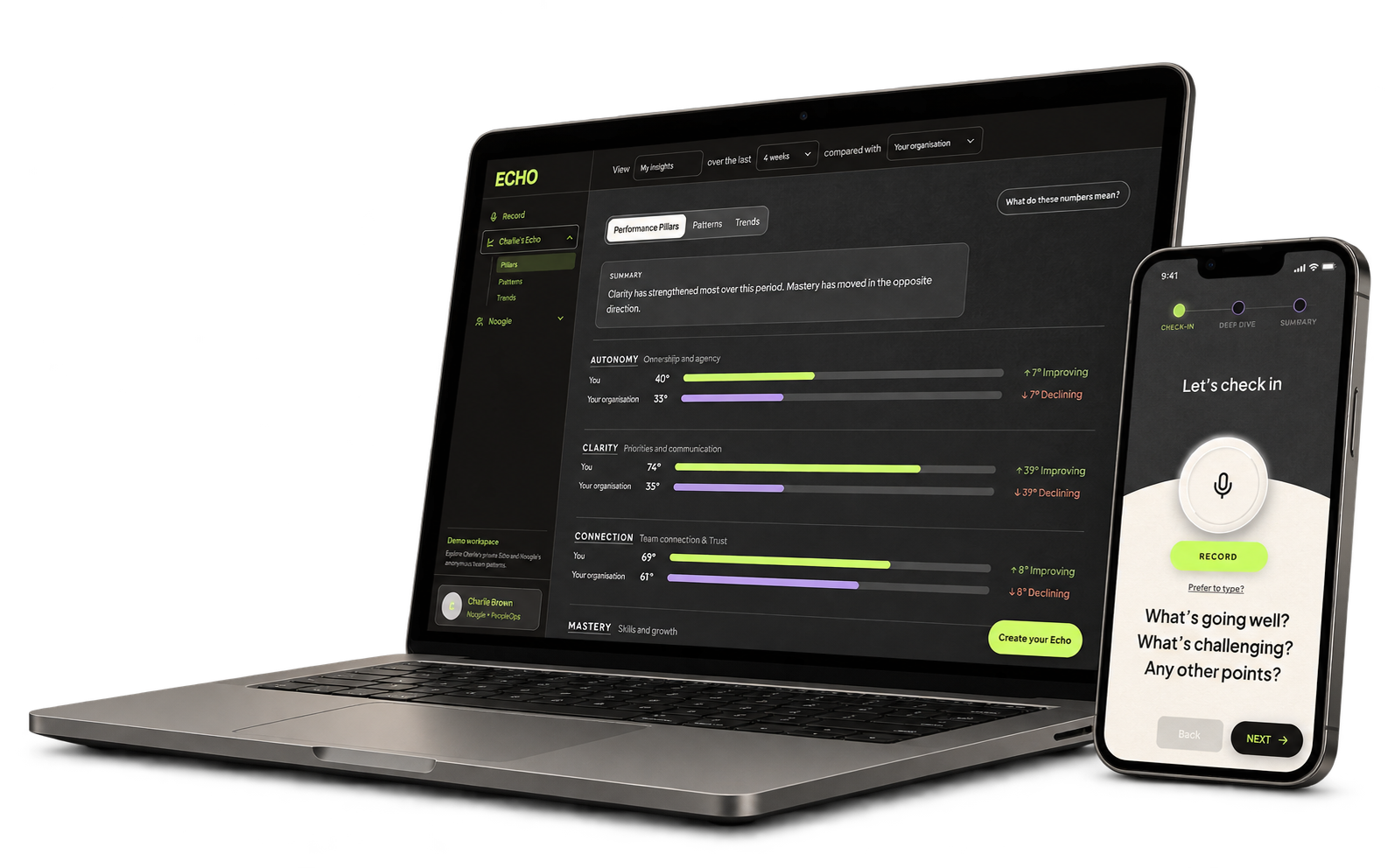
Small frictions add up.
Echo is a live signaling system that gives your teams a shared view of what’s driving work forward or creating friction as it happens, so they can consistently course-correct, be more effective and efficient.
For teams
Connected Echoes become anonymous signals, so leaders can spot momentum and friction early.
For you
Your Echo is private and yours to keep—across roles, teams and organisations.
How Echo works
01 / Check in
02 / Team signal
03 / Your record
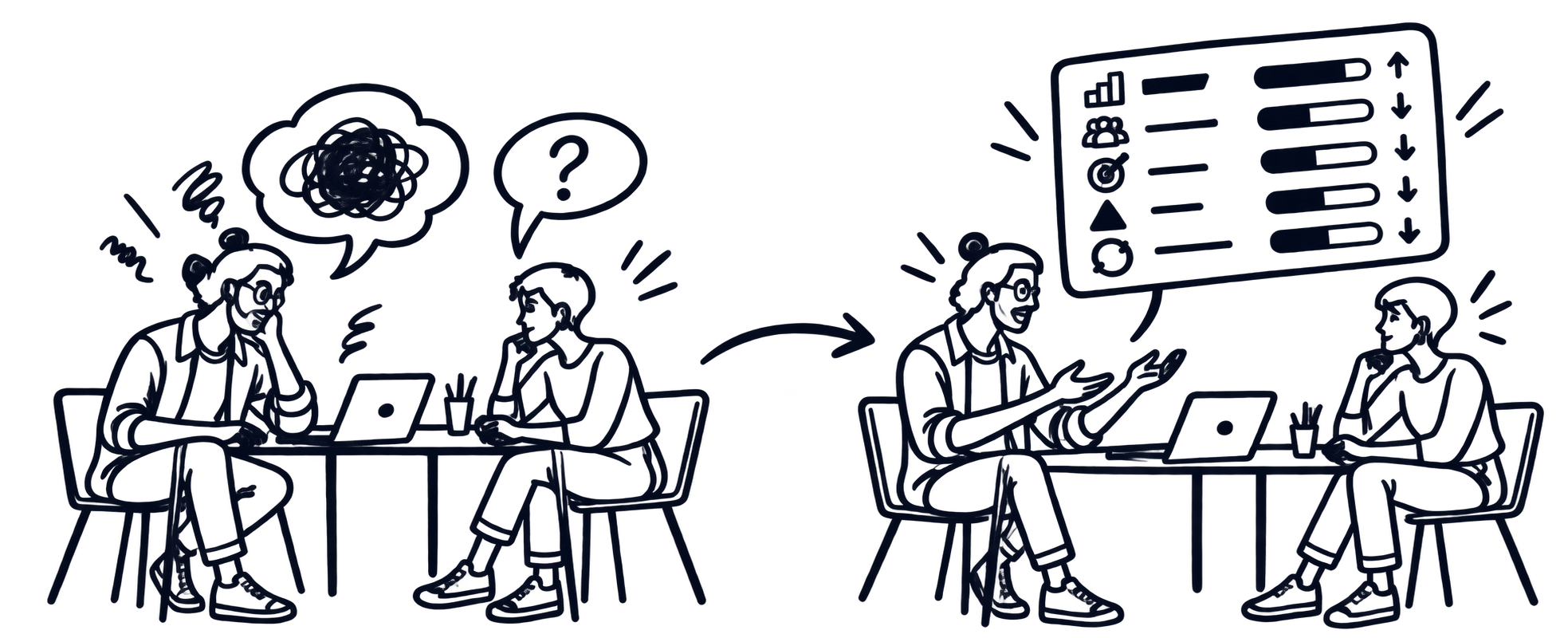
What is the most expensive meeting in modern organisations? The one-to-one. Echo makes it more directive and more valuable.
The old system
Charlie and his manager spend their one-to-one trying to pinpoint the problem.
With the Echo system
Recurring bottlenecks and unclear priorities give them a shared view of what to protect, investigate and change next.
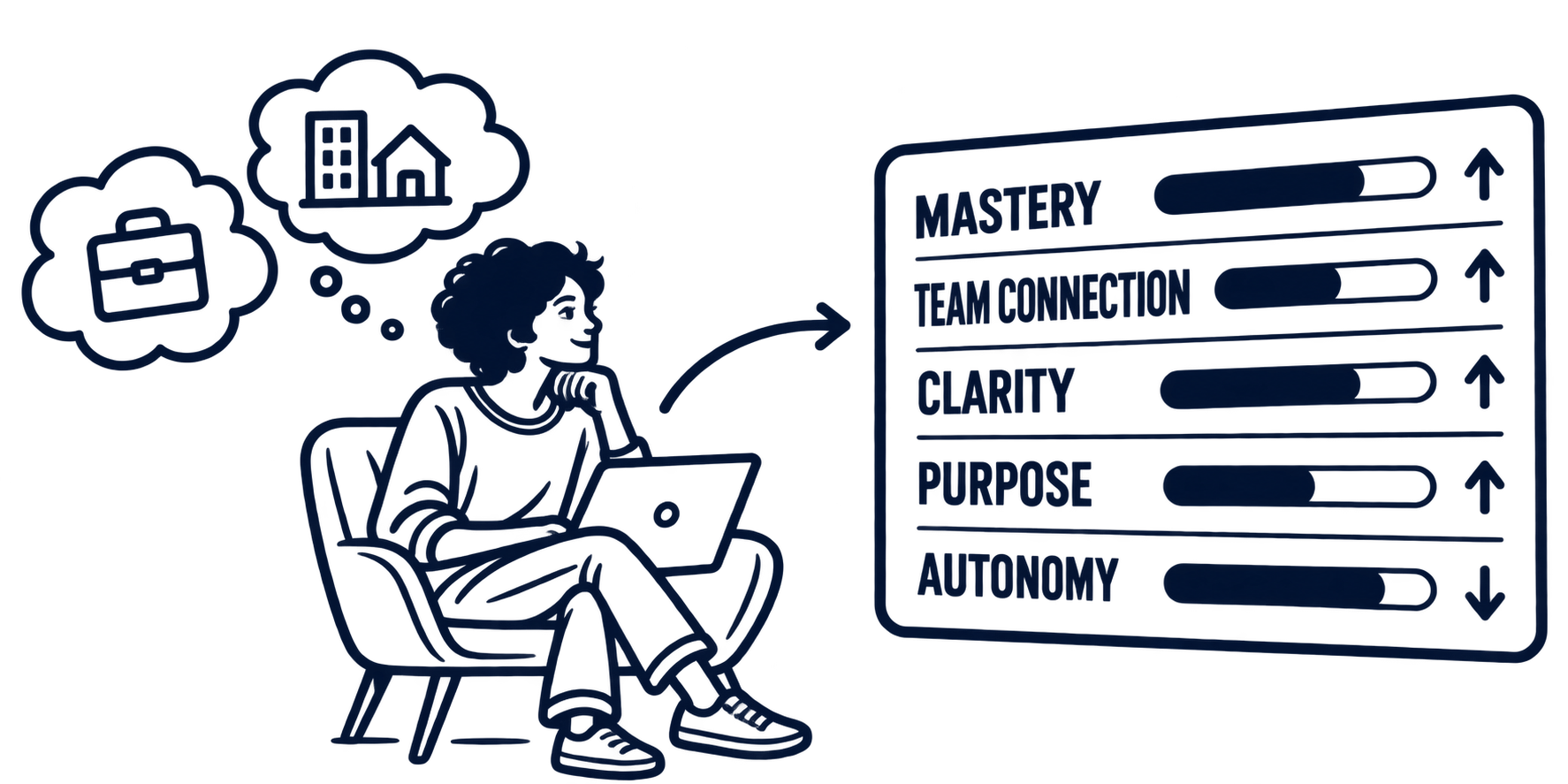
Create a private record of the conditions behind your best and worst work—across roles, teams and organisations.
Knowing what helps
Rely on memory and instinct.
See the conditions where you do your best work.
Improving performance
Wait for a review to hear what is off.
See what’s going well and what’s not in real time, then make changes or course-correct as things happen.
Moving forward
Lose the context of what you learned.
Take your record of what helps you work best with you.
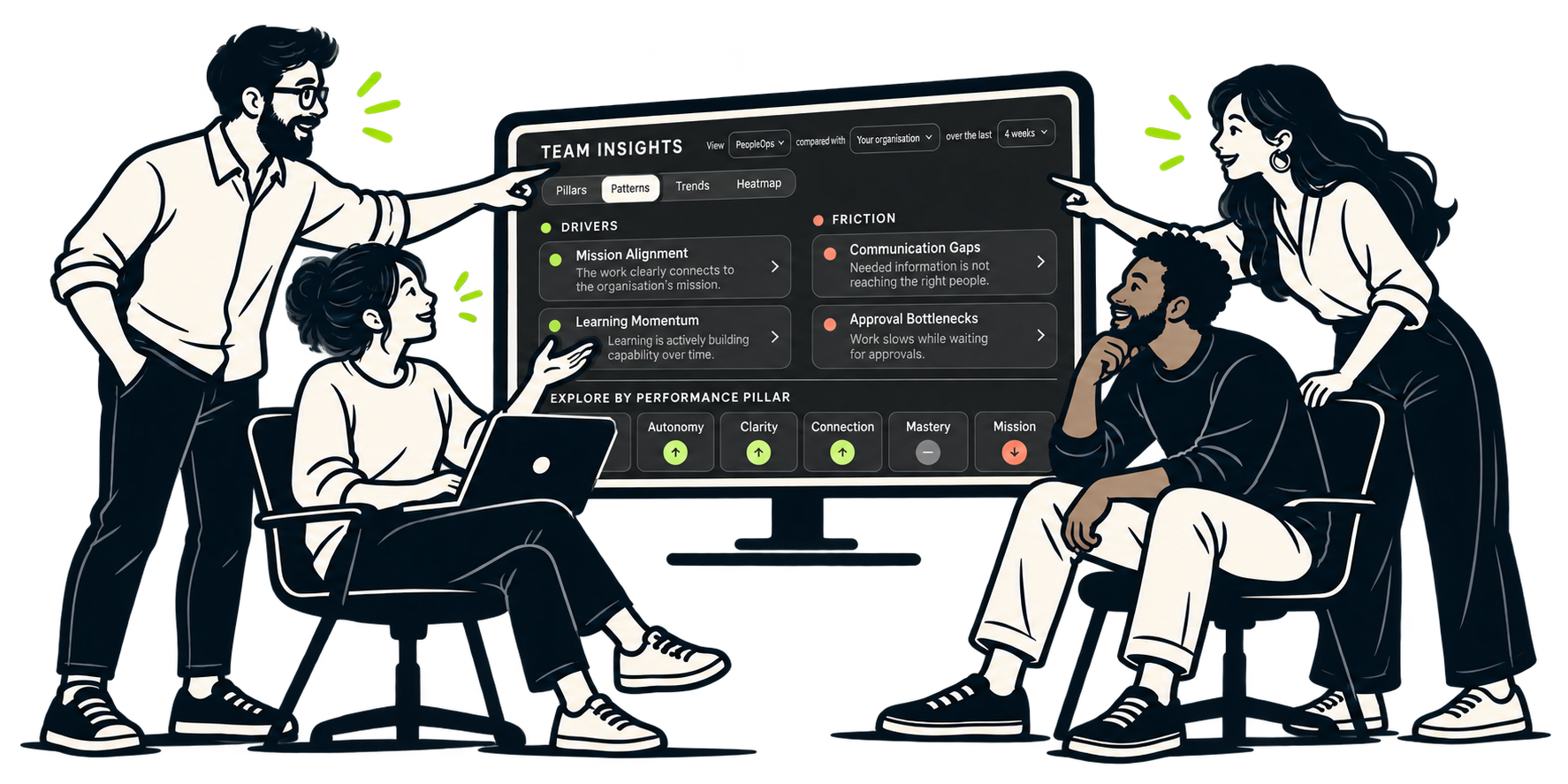
For a founder
Look at four weeks, six months or a year of anonymous patterns to see what is moving Marketing and Engineering forward, where friction is building and what deserves attention next.
At five or more contributors, the view is aggregate only. Individual reflections stay private.
A better baseline
For years teams and organisations have run on annual snapshots, delayed surveys and intuition. Echo makes the invisible details visible—like blood work for your team and work.
The old system
You look backwards, connect incomplete dots and react once the moment has passed.
With the Echo system
Echo often. Course-correct as you go. Build better, stronger, faster teams.
Take a quick voice or text check-in whenever work shifts. Echo turns it into a private timeline of your drivers, frictions and performance patterns. When five or more people in a connected group contribute, it also surfaces anonymous team patterns—so your team can see what is helping, what is slowing work down and where to course-correct.
When people choose to connect, teams see anonymous patterns—not individual reflections, summaries, or identities.
Team Insights appear only when at least five people contribute in a group and timeframe.
Yes. View the public demo to explore a populated private Echo and anonymous team patterns.
Echo is free for up to 8 team members. Paid plans are available as your team grows. Your Echo is yours to keep. Your team insights are sponsored by the connected team.
View pricing